Content
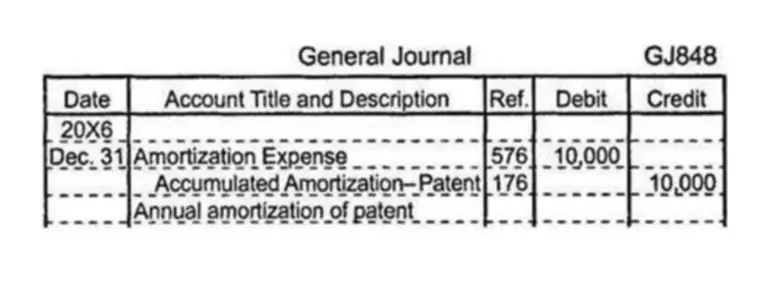
The general ledger is the main ledger in a company’s accounting system. It summarizes all the transactions from every account that were posted throughout the year. Since most companies have many different accounts, their general ledgers can be extremely long. You paid, which means cash t account example you gave cash so you have less cash. To decrease the total cash, credit the account because asset accounts are reduced by recording credit entries. In the journal entry, Utility Expense has a debit balance of $300. This is posted to the Utility Expense T-account on the debit side.
New U.S. Bank Shopper Cash Rewards Card: Up to 6% Back – NerdWallet
New U.S. Bank Shopper Cash Rewards Card: Up to 6% Back.
Posted: Fri, 14 Oct 2022 19:11:15 GMT [source]
They are useful communication devices to discuss, illustrate, and think about the impact of transactions. The physical shape of a T-account is a “T,” and debits are on the left and credits on the right. The “balance” is the amount by which debits exceed credits . Here is an example of two T-accounts posting the purchase of a car. As you can see, the cash account is credited for the purchase of the car and the vehicles account is debited. Cash is an asset, and asset account totals decrease with credits. Once all journal entries have been posted to T-accounts, we can check to make sure the accounting equation remains balanced.
T-accounts for Journal Entry 1
Nominal accounts are revenue, expenses, gains, and losses. Accountants close out accounts at the end of each accounting period. This method is used in the United Kingdom, where it is simply known as the https://quickbooks-payroll.org/ Traditional approach. AssetDebits Credits XThe «X» in the debit column denotes the increasing effect of a transaction on the asset account balance , because a debit to an asset account is an increase.
Right after this entry has been recorded, the check cashed, and the proceeds put in the box, there will be $100 in the box again, an amount which will match the general ledger account. In fact, there is always $100 in the box if you add up all the receipts and the cash (more or less, depending on the cash over/short situation). This system simply delays the recording of small expenses until the end of the accounting cycle or the fund is replenished. It’s not really an adjusting journal entry because there is an actual transaction being recorded. Having a petty cash account is just more convenient than going to the accounts payable clerk every time someone needs a stamp or a liter of coffee for a meeting.
Why Do Accountants Use T Accounts?
The term describes the appearance of the bookkeeping entries. Double Entry Accounting System is an accounting approach which states that each & every business transaction is recorded in at least 2 accounts, i.e., a Debit & a Credit.
You will notice that the transactions from January 3 and January 9 are listed already in this T-account. The next transaction figure of $300 is added on the credit side. Checking to make sure the final balance figure is correct; one can review the figures in the debit and credit columns. In the debit column for this cash account, we see that the total is $32,300 (20,000 + 4,000 + 2,800 + 5,500). The credit column totals $7,500 (300 + 100 + 3,500 + 3,600). The difference between the debit and credit totals is $24,800 (32,300 – 7,500).
5 T-accounts, debits and credits
For example, Colfax might purchase food items in one large quantity at the beginning of each month, payable by the end of the month. Therefore, it might only have a few accounts payable and inventory journal entries each month. Larger grocery chains might have multiple deliveries a week, and multiple entries for purchases from a variety of vendors on their accounts payable weekly. When the company issues stock, stockholders purchase common stock, yielding a higher common stock figure than before issuance. The common stock account is increasing and affects equity. Looking at the expanded accounting equation, we see that Common Stock increases on the credit side.

To increase an asset account, remember that the assets are on the left side of the fundamental equation, and so you record a debit entry on the left side of the “T”. For different accounts, the debit and credit can mean either an increase or a decrease in that account’s balance. For all the asset accounts, which include cash, accounts receivable, property, plant, equipment, etc., an entry on the left side of the T means an increase in that account balance. A right-side entry , on the other hand, means a reduction in that account’s balance. For liability accounts, which include bills payable, loans, outstanding salary, etc., this equation is exactly the opposite. An entry on the left side of the T signifies a decrease in that account’s balance, while a right-side entry in a T account means an increase in that account balance. Let’s take an example to understand how entries are recorded in T accounts.
T account example
This is posted to the Common Stock T-account on the credit side . We now return to our company example of Printing Plus, Lynn Sanders’ printing service company.
Daniel Liberto is a journalist with over 10 years of experience working with publications such as the Financial Times, The Independent, and Investors Chronicle. He received his masters in journalism from the London College of Communication. Daniel is an expert in corporate finance and equity investing as well as podcast and video production. The left side of the Account is always the debit side and the right side is always the credit side, no matter what the account is. Career in accounting, T Accounts may be your new best friend. Stay updated on the latest products and services anytime, anywhere. These examples will include some of the most used T-accounts.
This means that a business that receives cash, for example, will debit the asset account, but will credit the account if it pays out cash. Once the rent is paid, accounts payable will be debited for $4,000, which will eliminate the liability, and cash will be credited for $4,000.
- Such software automatically stores a complete record of the transaction as checks are generated.
- The Order Blog is the go-to resource for finance and operations professionals who want to grow their business.
- FREE INVESTMENT BANKING COURSELearn the foundation of Investment banking, financial modeling, valuations and more.
- Every transaction has two equal parts, a debit one and a credit one.
- A piece of catering equipment for $12,000 was purchased.
- This is posted to the Cash T-account on the credit side beneath the January 14 transaction.
In this way, debits and credits increase or decrease the corresponding accounts to keep the books balanced. In the following example of how T accounts are used, a company receives a $10,000 invoice from its landlord for the July rent. The T account shows that there will be a debit of $10,000 to the rent expense account, as well as a corresponding $10,000 credit to the accounts payable account. This initial transaction shows that the company has incurred an expense as well as a liability to pay that expense.
T-accounts have the account name listed above the T, and the debits and credits make up the left and right sides, respectively. The Profit and Loss Statement is an expansion of the Retained Earnings Account. It breaks-out all the Income and expense accounts that were summarized in Retained Earnings.